
"There are very few shortcuts in marine rigging. The ocean has a way of exposing every one of them."
A History Written in Hard Lessons
Over seventy-five years, Hayn has been manufacturing stainless steel rigging hardware from our facility in Connecticut, suppling fittings to coastal cruisers, offshore racers, charter yacht fleets, and everything in between. We've seen rigs go up — and, unfortunately, we've seen some come down.
The knowledge that accumulates over three quarters of a century is difficult to compress into a catalog, a data sheet, or even a seminar. But the pattern of what fails, why it fails, and what could have prevented it? That pattern is remarkably consistent. It doesn't matter whether we're talking about the 1950s or today.
The Anatomy of a Rigging Failure
When a rig fails — when a mast comes down or a stay parts at sea — the immediate question is always what broke. But the more important question is always why. And in our experience, the answer almost always falls into one of three categories:
-
Fatigue from age or overloading: Rigging components have finite fatigue lives. A T-terminal head that has been loaded and unloaded thousands of times over ten years develops signs of fatigue that no visual inspection can detect from deck level. Eventually, one wave in one squall provides the final loading cycle, and the fitting fails without warning.
-
Assembly errors: A fitting that was swaged over corroded wire. A turnbuckle with a missing cotter pin. A toggle installed without being properly aligned to the load plane. These errors are baked in at installation and may take years to fully express themselves.
-
Wrong hardware for the application: The fitting that was the right size last decade may be undersized for the boat after it was re-rigged with a taller mast or larger sail area. Charter vessels accumulate far more fatigue cycles than recreational boats of the same vintage. Racing rigs operate at higher tensions than the fitting's original design assumed.
None of these failure modes are mysteries. All of them are preventable. That's the central lesson of 75 years: failure is rarely random. It is almost always the predictable result of something that was overlooked, deferred, or made to fit when it didn't quite.
.png?width=786&height=442&name=Untitled%20design%20(2).png)
Hayn’s Rod Rigging line is manufactured in their Rocky Hill Connecticut facility located in the Northeast United States, to the strictest of quality standards. As with our wire rope fittings, Hayn offers short lead-times for both our standard products as well as custom components.
Looking for Navtec Rod Rigging Components? Hayn Marine is your source for all Navtec Hardware.

The Components That Fail Most Often
In our decades of producing service bulletins and working with riggers who call us about failures in the field, the same components appear again and again:
-
T-Terminal Heads: The radius where the terminal head meets the shank is the #1 crack initiation site. The crack begins on the inside, where you cannot see it, and propagates outward. By the time it is visible, the fitting is already structurally compromised. Inspection at this point — with the correct tools and lighting — saves rigs.
-
Swage-to-Wire Interfaces: Electrolytic corrosion inside the swage barrel is invisible from outside. Dissimilar metal contact, trapped moisture, and the natural gap between strands and barrel create a hidden environment that progressively weakens the wire. The barrel can look perfect while the wire inside is severely corroded.
-
Chainplates: Deck penetrations trap moisture. The corrosion happens below the boot, below the deck, in a place where it is rarely examined. By the time rust staining appears on deck, significant section loss may have already occurred.
-
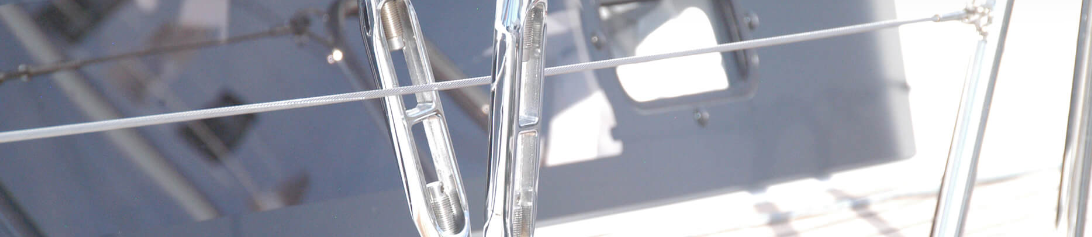
Toggle Pins and Turnbuckles: Side loading, worn threads, and missing cotter pins create fatigue at the cross-section. The fitting bends slightly on every tack. Over years, the accumulated bending cycles exceed the fitting's fatigue limit.

What 75 Years Tells Us About Prevention
The good news embedded in 75 years of failure history is this: the failures are patterned. They happen in known places, at known rates, for known reasons. That means they are preventable — not through heroic engineering, but through consistent, informed inspection and quality hardware selection.
Inspection works only if it is systematic. Walking around the dock and looking up at the rig is not a rig inspection. A real inspection includes knowing exactly which components to examine, knowing exactly where to look on each component, cross-referencing the hardware against any manufacturer service bulletins, and documenting what you find so you have a baseline for next year.
Hardware quality matters — and the manufacturing process behind that hardware matters more than most people realize. A casting and a cold-worked fitting can look identical on a spec sheet and in a parts bin. They are not the same component. The way a fitting is made determines its grain structure, its fatigue resistance, and ultimately how it will perform when the load comes on it.
Hi-MOD Compression Terminals
From Hayn Marine
Hayn’s Hi-MOD Compression Terminals & Failsafe Insulators set the industry standard for excellence in the marine industry. Our products are designed to maintain integrity even in the toughest conditions.
Want to learn more about how to install Hi-Mod Fittings?
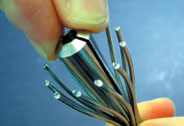

Visit the Hayn Hi-MOD Page on our website for a full listing of available products, including installation instructions and a visual step-by-step guide.


The Partner You Call Before It Fails
One of the things 75 years has taught us is that the riggers, yard managers, and vessel owners who have the fewest failures are the ones who ask questions before they have a problem. They call us to ask which fitting is appropriate for a particular application. They call to ask what the service bulletin for a specific part says. They call to describe an unusual failure mode they haven't seen before.
That's the relationship we've built over three generations at Hayn: not just a parts source, but a technical partner. Our production records go back decades. Our team has field experience, not just catalog knowledge. When you call us with a problem, you're connecting to 75 years of accumulated rigging intelligence.
The failures that show up in our service bulletins? They're in there because we studied them. Because we tracked the patterns. Because we believe that every failure we can document is one we can help someone else prevent.

"Rigging failure is rarely random. It is almost always the predictable result of something that was overlooked, deferred, or made to fit when it didn't quite."
The Hayn Standard
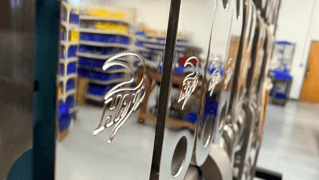 What ties all of these product families together is not just stainless steel — it's the manufacturing philosophy behind each piece. Hayn has been producing rigging hardware in the United States since 1950. Every product is engineered for predictable strength, corrosion resistance, and long service life in the demanding marine environment. Members of NMMA and Sail America, Hayn holds itself to standards that go beyond catalog specifications.
About Hayn
Since 1950, Hayn has set the standard for quality and service in the manufacture of stainless steel cable rigging hardware. Our Connecticut based manufacturing facility is comprised of highly automated equipment and skilled craftsman, producing the most consistent and highest quality rigging products on the market today while remaining price competitive. Hayn’s quality program and stringent raw materials requirements support our commitment to quality ensuring our hardware retains its integrity and beauty throughout it’s life cycle. The marine line of products includes wire rope and most recently NAVTEC rod rigging systems.

Industry Leader In Marine & Architectural Hardware
Today, Hayn is an industry leader in both the marine and architectural stainless steel hardware markets. We strive to continuously engineer innovative solutions that meet the functional demands and the aesthetic tastes of those that enjoy our hardware each day, whether they are out at sea or out on their back porch.
Ready to start a project or get a quote? Contact Hayn Marine at sales@hayn.com or toll-free at (800) 346-4296.

Have a Question? Ask us now!
You can also request a catalog or view the full hardware index online.